


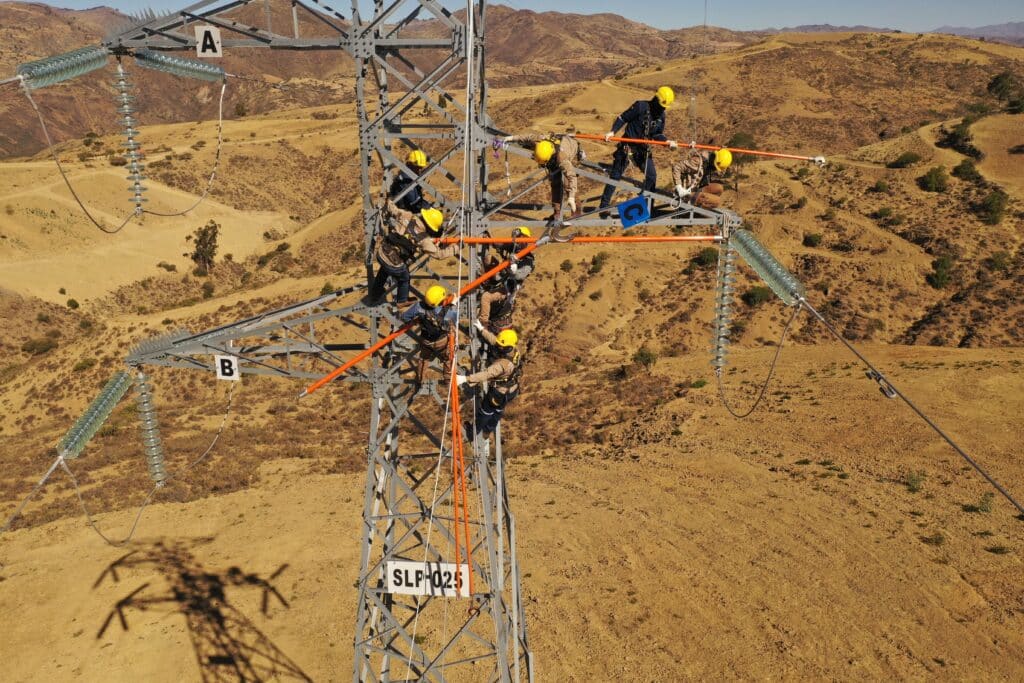
High and Extra-High Voltage circuits form the backbone of Transmission and Subtransmission Lines, connecting substations and power plants. Investing in reliability, quality, and operational safety at this level reduces the magnitude of outages, increases transfer capacity, boosts productivity, and reinforces the stability of the electrical system. For training purposes, we consider High Voltage Live Line works to be performed in the range of 36kV – 230kV. For Extra-High Voltage Live Line courses, we consider levels above 230kV AC and DC.
This is an open portfolio, meaning it sets a standard for what we deliver while also offering customization options aligned with technical briefings.
Who are these courses for?
The High and Extra-High Voltage Live Line trainings are intended for maintenance teams working in one of the following systems: Subtransmission Lines and Substations and Transmission Lines and Substations.
Target audience: electricians, foremen, safety technicians, supervisors, and maintenance engineers.
Minimum participant requirements:
- High school diploma;
- Technical qualification: Regulations applicable in the country;
- Medically and psychologically fit;
- Previous experience with the listed systems (construction and/or maintenance on de-energized systems).
Scope
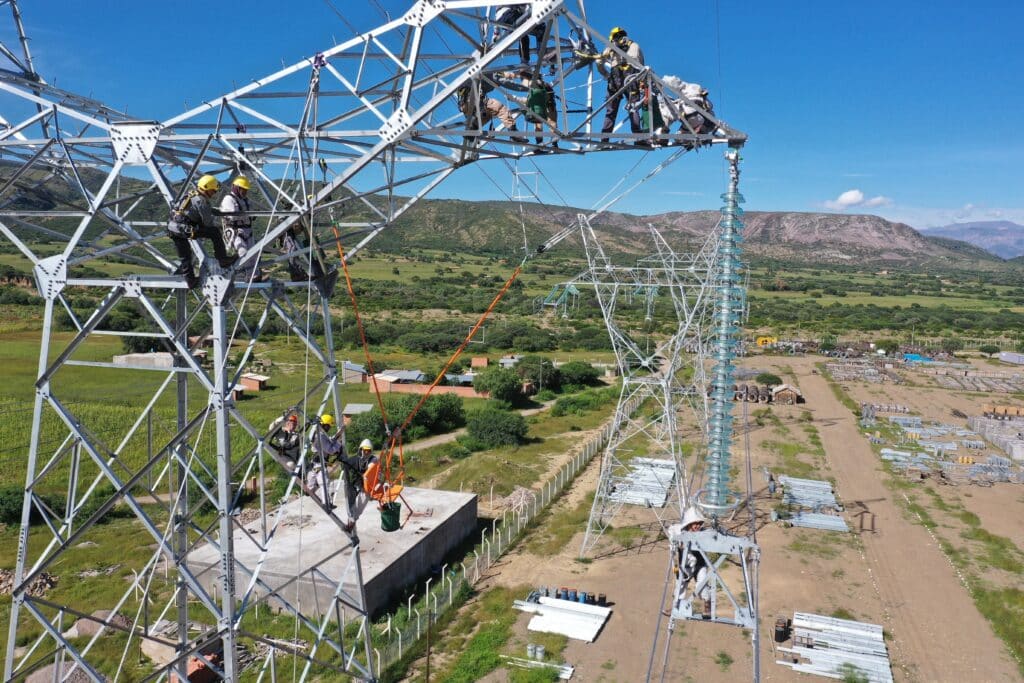
In High and Extra-High Voltage Live Line Working, we use two working methods: Hot Sticks Method — in which the electrician remains on the ground potential and works with insulated poles and accessories, maintaining a safe distance from the circuit — and the Barehand Method — in which the professional is equalized to the phase potential and makes controlled contact with the conductor using conductive clothing and approach and access procedures.
Among the means of access and positioning, they include:
- Climbing;
- Hydraulic lifts;
- Insulating chair;
- Insulated ladder;
- Insulating rope;
- Helicopter;
- Scaffolds (used in substations).
The working methods and means of access must be defined primarily in the technical briefing, considering the task, assets, tools, team, and operational restrictions. In addition, all activities must comply with the risk analysis, the procedures established by the client, and the applicable regulations.
Course workload
The final workload is defined in a briefing and depends on multiple factors. In general, this parameter depends on variables such as: number of participants, modules, number and complexity of tasks, choice of method(s) and means of access, among others. Therefore, the following figures serve only as an initial parameter.
| Theme | Training | Recertification |
|---|---|---|
| Transmission Lines – Hot Sticks Method | 120–240 hours | 40–120 hours |
| Subestations (HV) – Hot Sticks Method | 80–120 hours | 40–120 hours |
| Transmission Lines – Barehand Method | 160–240 hours | 40–120 hours |
| Subestations (HV) – Barehand Method | 80–120 hours | 40–120 hours |
If you do not yet need recertification but need to add specific knowledge, we offer complementary courses. These training courses are designed to expand the knowledge already acquired by your team without revalidating their training. In addition, they require a foundation compatible with the prerequisites presented, as well as proven experience in the main track and a workload defined in a briefing (typically 40–120 hours, which may vary).
In addition, CTST offers the High Voltage Live Line Methodology Course, a strategic training program aimed at managers, supervisors, and teams who need to understand, decide, and standardize the method before applying it in the field.
CTST offers training in any combination of the methods and systems described here, tailoring the course program to the reality of your company. In any case, please note that reductions in working hours increase operational risk and significantly remove performance guarantees. We talk more about this in one of the questions listed in: FAQ: Questions about Live Line.
Deliveries and Responsibilities
In order to ensure security, compliance, and fluidity with our partners, we clearly divide what is the responsibility of the client and what is the responsibility of CTST. These items must be validated in the briefing and formalized in the proposal. As such, they may vary depending on the decisions made in the meeting.
CTST provides:
- Quality and accumulated experience in training and field operations;
- International recognition and operations in different countries, complying with local regulations;
- Highly trained and experienced instructors;
- Standardized methodology, focus on operational safety and productivity.
- Multilingual support and consistent technical documentation.
CTST is committed to delivering:
- Teaching materials (student kit with manual book, presentations, and other applicable resources);
- Course program;
- Individual assessment of students (with theoretical and practical tests where applicable);
- Complete final training report;
- CTST individual certification.
In order to deliver a complete solution, CTST also undertakes to provide technical procedures and documents, such as risk analysis, mooring tables, or safety distances, if necessary.
Our course program covers theoretical classes, simulations in training fields, and practical classes in energized circuits, while the client is responsible for:
- Access to company areas and assets related to Live Line practices;
- Access to equipment to be used in the tasks defined in the technical briefing (poles, positioning equipment, tools, PPE/CPE, etc.);
- Physical space for theoretical classes;
- Logistical support and internal security documents/clearances.
Take your next steps
- Schedule a technical meeting
- Receive a personalized commercial proposal with course program and responsibilities
- Technically align the scope
- Monitor the training progress
- Receive final reports with recommendations
- Take advantage of post-course support
In conclusion, in the High and Extra-High Voltage Live Line Training, we structure the course program according to your team’s needs, combining relevant methods, access, and modules. In this way, we seek to improve your team’s safety, compliance, and efficiency, with experienced instructors, robust methodology, and theoretical and practical knowledge. Contact CTST to learn more about our teaching methodology.